Thursday, 16 June 2022

That was the Month in Jersey: August 1966 – Part 1

Some more from Jersey Life, 1966.


That was the Month in Jersey: August 1966 – Part 1

By Phyllida Campbell

With the summer at its height it is now or never for all those who make their living from tourism. Oceans of paint applied last winter, tons upon tons of concrete blocks rising to form annexes and extensions to buildings, thousands of land and sea miles covered in the search for new stock, shoe leather worn away on visits to the Bank Manager, hard bargaining for red-branded ‘H’ cars—if all that effort is not paying off now, then lessons will have been learned for next time.

Shopkeepers, like farmers, are wary of admitting to an exceptionally good season. However thronged their premises, they voice only modified rapture at the fact that they are rushed off their feet. Still, there are few grumbles this year so far. The shipping strike was more than nuisance value, but most wholesalers and retailers ordered their stocks well ahead and made good use of parcel post and air freight.

[The National Union of Seamen went on strike in May 1966 for better pay and condions. The strike continued until 1 July 1966]

Inevitably the big departmental stores with winter trade ahead must be the losers to a certain extent. Mr. G. F. Voisin, owner of Voisin and Company of King Street explained ‘Although sales were affected very little, autumn will be the time when we are bound to feel an echo of the strike. The small boarding and guest house proprietors who will be our customers will have less money to spend’.

The Unlucky Ones

He was right. It is the ‘little people' in the world of Jersey tourism who have taken the rap. Mr. and Mrs. Guesthouse Keeper with such a short time in which to take money, regarded their empty bedrooms in an agony of dismay. Away went the hope of working off the mortgage this year.

The big hotels, most of their clientele airborne, came off much better. ‘One could put our loss at that time at about five per cent‘ said Mr. Brian Packer of the Dolphin Hotel on Gorey Pier. ‘We have so few people who come by sea, but it was awkward not being able to get supplies of English draught beer’.

That amazing mushroom, the car hire industry, did not escape entirely unscathed. ‘We had some mid-week cancellations’ said Group Captain Thomson, a partner in Hallmark Cars who are in the hire business in a big way. ‘Competition is so keen now that even the odd cancellation can hurt us. So many small outfits start up each season, make a little money, then pack up’.

All the same, the verdict of all those who serve the tourists, from the humble deck-chair concessionaire to the luxury hotelier, is ‘a good season and long may it last!’


The Farming Scene

While holiday-makers explore the bays and crowd the night spots, the agricultural community who form the true backbone of the Island, work quietly on with their army of Breton labourers, occasionally slipping out to sea in the small hours for a bit of trawling by way of relaxation. Although disinclined to undue optimism, growers cautiously admit to a good potato season despite the  sharp drop in prim at the beginning of July. They went as high as 106/- per cwt. in early June and cropping was heavy, averaging 8 tons per vergee. Thanks to the cargo ships that carried on by special dispensation the strike had precious little effect. The heavy rainfall early in July was bad luck as it did affect the seed crop for next year to a certain extent.

Indoor tomato growers did reasonably well with an increased income per plant and prices higher than last year. Outdoor tomatoes look well except in some cases of early planting in bad weather, broccoli planting is going on apace and the gladioli crop has just about come to an end. Their trouble has been shortage of moisture and a certain percentage of Thrips, but the price has been steady.

A great deal of capital on this island is tied up in the daffodil crop, and with the Scilly Isles in hot competition, heavy rainfall from now on could be a hazard. 

Particularly versed in daffodils is a new arrival in Jersey, Mr. Peter Bastion, an able and amiable young Yorkshireman who has been seconded to our Department of Agriculture from the National Agricultural Advisory Service. He has had a good deal of experience in the Scillies where he specialised in farm management and daffodils. After many awful warnings before his arrival, he is delighted by the kindliness and friendliness of the farming community.

Strange Thefts

How pleasant it is that the Beatniks, with their long dirty hair, skin-tight ragged jeans and moronic-looking girl friends, have almost deserted us this year. Perhaps that is the one good thing for which we have to thank the shipping strike. There weren’t any passenger ships when warm weather began, so perhaps they decided to take their dubious custom elsewhere. 

Even without this undesirable element, strange and sometimes pointless thefts occur here all through the summer. To mention only a few this month, two tortoises disappeared from the Zoo, eight ladies’ blouses vanished from the British Railways unloading quay, a trumpet was snatched from one parked car, a sewing machine from another, and last but not least in Guernsey the Union Jack was filched from the Castle Cornet.

Wits of the Month

Mr. Michael Newell, Jersey’s Police Court Magistrate, about to give judgement on two Irish roisterers, who were alleged to have almost torn each other’s trousers off in a scuffle, remarked: This is not a Breach of the Peace, but a piece of the breeches’.

Lord Stanley of Alderley, a keen sailor, proposing the bride's health at the Hardy-Brett wedding in Gorey, wound up by saying ‘I shall conclude with the last words of another famous sea-faring man who died 160 years ago—Kiss me Hardy!’ And this he proceeded to do.

New Batch LFTs - Are they accurate?


A correspondent of mine recently tested positive for Covid (via a PCR), but the lateral flow tests differed in results. The photos show 2 occasions where a lateral flow was taken, on each occasion with a new style LFT (with the blue writing) and an older style LFT. In each case, the older LFT showed a clear positive, while the new one showed not even a faint positive line.

Anyone seeing this, please can you tell me if you have shown symptoms but not tested positive on the newer LFTs to detect Covid?

I wonder why the tried and clearly tested older LFTs have been changed to the newer (and apparently less accurate) ones!

This is obviously of concern because the early symptoms may have been mistaken for hay-fever and Covid spread more widely as a result. Health Minister. Deputy Renouf has recently suggested taking more LFTs as cases have increased substantially recently, but is he aware that the newer LFTs may be less able to detect Covid?

Wednesday, 15 June 2022

Hearing and the Vote: Discrimination in Jersey


Hearing and the Vote: Discrimination in Jersey

Professor Claire de Than, chair of the Jersey Law Commission, hit the nail on the head in her piece in the JEP:

Let us take the example of the right to vote from home in Jersey by an officer of the Greffe visiting your home to enable you to cast your vote. It is admirable that Jersey allows for this, since it provides access to voting for those who might otherwise be unable to do so because of illness or disability. However, the procedure falls just short of the inclusion it seeks to achieve.

Those who wish to vote in this way are required to complete a form requesting pre-poll home visit. They have to provide a contact telephone number on this form, even if they have no way of using a telephone because of a disability, such as being deaf.

Further, there is nowhere in the form that they can state that they cannot use a telephone, and people who cannot complete the form are also instructed to telephone for assistance.

This form seems to be designed only for those who can use the audio functions of a telephone without difficulty. However, forms like this (and all policies and procedures) should be inclusive by design.

Those in charge of creating them should consider, on the basis of evidence, the ‘who ‘, ‘why’ and ‘how’ of inclusive thinking: who might have difficulty complying with what we are asking them to do; why are we asking them to do it that way; and thus how should we modify our procedures in order to enable them to participate and uphold their rights?

Saturday, 11 June 2022

A Taste of Heaven


Today's poem is occasioned by a rather scrummy salad from Pat. I didn't mention the beetroot which you can see above or the cheese - I only had a limited number of words! And I don't drink wine any more but that's poetic licence!!

A Taste of Heaven

Mango and chicken, the taste divine
Jersey Royals, garlic mayo, avocado pear
And then perhaps also a little wine
A taste of heaven, I do swear

Salad days, when I was so very young
Lettuce, limp, doused in salad cream
Pickled onions, vinegary on my tongue
And over hard boiled eggs. A bad dream

Food these days has so much more taste
Vegetables boiled to death, terrible
Liver like leather soles. Oh what a waste!
Everything grilled. It was unbearable.

I remember enjoying watching Keith Floyd
Fun, irreverent, tasty, and filled that void

Friday, 10 June 2022

St Brelade's Election: Focus on Karl Busch

I have nothing against people coming from the UK and standing for election. But I do wonder how much knowledge and experience of local matters they have if they've only been here for a few years, as is the case with Karl Busch.

I also wonder about this commitment if their political record elsewhere does not suggest a good commitment to those who elected him.

Here are some public domain stories which are about his resignation as a district councillor in the UK before he came to Jersey. I can see on the hustings that he is very likeable and affable, and obviously his tea dances - which he mentioned at the hustings - are good for an aging population. But based on his past track record, I do wonder if despite any assurances given, he would be as committed to the States.

Karl Busch

https://www.thelondoneconomic.com/news/tory-councillor-who-missed-75-per-cent-of-meetings-because-he-was-running-dance-events-is-to-stand-down-123821/

A district councillor who missed 75 per cent of meetings because he was 200 miles away running dance events is to stand down.

Karl Busch, 54, met the legal requirement of attending one meeting every six months, but his absence sparked criticism from overwhelmed colleagues.

The Mid Devon councillor for Cullompton North split his time between his home in Exeter and the Channel Island of Jersey.

During his absences, fellow councillor Nikki Woollatt said she has been overwhelmed with her workload. She said: “I kind of feel that the council taxpayer has been subsidising him while he pursues other projects.

“He’s drawing an allowance, but not putting in the effort.”

https://www.bailiwickexpress.com/jsy/news/watch-dancing-councillor-shuffles-out-role-after-spending-too-much-time-jersey/#.YqOOv3bMLIU

UK district councillor is making quicksteps out of his role after being accused of letting his council work pile up while he waltzed off to Jersey to run a tea dance club.

Mid Devon councillor for Cullompton North, Karl Busch (54), made the announcement that he wouldn’t be running for election again last week.

It came after it was revealed that the Conservative had only met the legal minimum of one council meeting every six months, spending 75% of his time 200 miles away running dance events in St. John Parish Hall.

https://www.devonlive.com/news/local-news/councillor-accused-not-pulling-weight-2625113

Councillor Nikki Woollatt (Cullompton North, Independent) was not swayed.

She said: “I'm very pleased to see my fellow ward member here today. As I'm sure he knows, I'm one of the people that have been complaining about his lack of absence.

“I commend him on the work that he's doing, but that work isn’t carrying out the councillor role.

“He doesn't even have a telephone number published for his constituents to contact him on, but he does have a telephone number published for his tea dance clients.

“I get complaints from constituents that he hasn't replied to emails as people write to both of us. I can only report what I'm told. I've even had an officer tell me that he doesn't reply to his emails so while he may have been very busy on very commendable work he has not been carrying out, in my view, the role of a ward councillor.

“I've noticed in the last couple of years how much my casework has increased since his absence.”

The Revere

From Jersey Life, 1966. This has now been sold to Andium Homes for conversion to housing.


The Revere

A subtle ambience, an exotic yet dreamlike something in the atmosphere, making an evening to recall later with nostalgia; this is what all young lovers, lovers who are young in heart, incurable romantics, and those whose everyday life is encompassed by dull routine, long for when searching for the perfect place for dining out.

Marshall Doran and his wife Joyce evidently understood this all too well when fifteen years ago they created The Revere in Kensington Place Transforming the original tumble-down building into one of Jersey‘s smartest hotel-restaurants was a long job. 

Fortunately Mr. Doran was just the right man for the task, for like many sailors. he is one of the handiest people that ever breathed. In his youth (he is still only on the threshold of middle age), he was at sea for many years as a ship‘s deck officer. He served in the United States Navy during the war, but always nursed a longing to return to Jersey. an island he knew well from his boyhood days.

First task was to make the exterior look attractive, sited as it was in this rather dull little side street off St. Helier's beaten track. Today the hotel looks very much as it did when he finished it at that time, rather like a recherche French auberge with its well pointed granite porch, white jalousies and gay flower boxes. In the charming lounge, the French decor and huge granite fireplaces provide a symbol of gracious living, particularly in the winter when the log fires glow!


A Panelled Bar

The building of the bar was quite an achievement. It is made entirely of mediaeval hand-carved oak panels, acquired in one way or another from many parts of the world. There is also an alcove in the grill room displaying twenty-eight exquisitely carved panels from Langley Castle in Derbyshire. How they got from there to the Revere is quite a story, but unfortunately lack of space precludes the telling. The grill room itself is a symphony of wrought-iron, silver candelabra and rich furnishings. All the old oak dining tables are of Mr. Doran's own making, likewise the beautifully upholstered dining chairs.


Husband and Wife team

This two-year operation was not a one-man affair, Mrs. Doran, a keen collector of antiques and a woman of great imagination, worked with her husband all the hours there were, and she still paints the artistic ‘King Salmon‘ menus by hand, showing the rosy monarch with a crown on his head and a cigar in his fishy mouth.

Born in Cumberland, her family at one time owned Blenkinsop Castle on the borders, where she lived. Castles must be in her destiny, for now she and her husband own another, this time in Eire, in the form of a stone-built Gothic castle at Ballina on the River Moy, now to be transformed into a seventy-bedroom hotel with the accent on ‘the Good Life‘.

'We want to break away and start this' says Mr. Doran, ‘and the two places will complement each other‘.


New Management

For this reason, a new manager with complete responsibility has been appointed to The Revere. Mr. Peter Weaver was previously manager of the East Arms Hotel at Hurley near Maidenhead and has been in the hotel business all his life, as assistant manager, then manager, having trained in every department. A man of great charm and ability, Mr. Weaver is delighted with the Revere and Jersey. He feels there is excellent potential for a first-class restaurant here, with the finest French cuisine and the very best of service.

He is already becoming quite well known among Jersey's more discerning diners out. He feels that it is a very important part of his business to welcome each and every guest, to get to know his clientele and to ensure that they are really well looked after. In fact he is to be found in some part of the hotel at almost any hour of the day, from 7 am. until the small hours.

The granite wine cellar which Mr. Doran excavated and made by hand in those early days and its splendid collection of vintage wines particularly please him. On the residential side he has accommodation for ninety guests and intends to keep one floor open during the winter.

A Loyal Staff

No one realises better than Mr. Weaver that he is extremely fortunate in his staff. Lucien, the French chef who is certainly one of, and perhaps the best chef on the Island and who has spent nine years in Jersey, has formerly been to Bermuda or Jamaica each winter as chef to one of the luxury hotels. Rudi the barman, an Italian, was previously at the White Hart at Sonning-on—Thames and will stay on for the winter season. Peter. the quiet and courteous head waiter, is an Austrian and has filled this post for three years, while Manuel the wine waiter is from Portugal.

Mr. Weaver has already thought up some bright ideas and put them into operation. He has a doorman on duty parking cars for the restaurant and has introduced a 25x- dinner dance on Saturday nights. It is hard to think of anything pleasanter than dining in those beautiful surroundings while the candles, in silver candelabra or perhaps an old Bristol bottle, flicker gently, and elegant silver, glass, mirrors and objet d’art catch the reflection from shelves or alcoves all around the walls.

On the dance floor the Mary Carlyle Trio play soft dinner music and Mary may be heard singing in her own quiet, sophisticated manner. Then, with bass and drums she swings to a lively tune and the diners glide onto the floor. The escargots, the coquilles Saint-Jacques or the Homard Thermidor is abandoned for the moment, the wine sparkles in the goblets, soft music, golden candlelight, beautiful gowns—yes, that subtle and so elusive ambience is found at The Revere.

Tuesday, 7 June 2022

Faith, Elections and the Church of England

In the St Saviour's Hustings, Rob Averty’s question on whether faith in God, specifically the God witnessed to by Jesus Christ, would influence their thinking on issues received a mixture of responses from those with faith and those with none.

Deputy Montfort Tadier, who was there with other members of Reform Jersey to support their candidate, tried to raise a point of order: “How can you allow a question about God, who may not exist, and a lot of people don’t believe in, when you don’t allow a question about child protection?”

It is ironic that a report about the church in Jersey in 2013, noted of a churchwarden that:

"He is too tactile, stands too close to women, touches too much/inappropriately. His manner was deemed to be inappropriate to such an extent that he was chaperoned within the church when in close proximity to women."

No action was taken against the churchwarden, but clearly it was inappropriate for him to be in such a position of trust within the church.

Indeed, some lay readers and female members of clergy were warned to be on their guard on being alone with him, no doubt in case he demonstrated his tactility!

Perhaps Mr Avery should have been asked what he thought about that kind of situation, and how it managed to fit into a framework of faith in God!

God: An Anatomy - A Review

He is the Rock, his works are perfect, and all his ways are just.
A faithful God who does no wrong,
upright and just is he.


Francesca Stavrakopoulou in her book "God: An Anatomy" produces a startling different image of God. This is her description of how she came to look at the texts of the Jewish bible differently:

"While I was studying theology and religion at university, there was a broad assumption among lecturers and students alike that the God of the Bible is without a body. This was a formless, imageless, invisible deity, who in the Hebrew Bible (the Old Testament) revealed himself in words mysteriously uttered through his prophets, and then in the New Testament became flesh (“incarnate”) in Jesus Christ, in order to die for the sins of humanity before resurrecting and ascending back to the heavens. But as I looked closely at the books comprising the Bible, I couldn’t find this bodiless God. Instead, these ancient texts conjured a startlingly corporeal image of God as a human-shaped deity, who walked and talked and wept and laughed. A god who ate and slept and felt and breathed. And a god who was distinctly male."

"I vividly recall protesting in the question-and-answer session at the end of the lecture, “But lots of biblical texts suggest that God is masculine, with a male body.” “The problem isn’t God,” replied the professor — a highly respected Christian theologian, and a man of the cloth. “The problem only arises when we take the Bible’s descriptions too literally.”

And though a process of taking what other interpreters have taken as metaphorical, she constructs this image of God, taking the descriptions as literal not metaphors.

“The God revealed in this book is the deity as his ancient worshippers saw him: a supersized, muscle-bound, good-looking god, with superhuman powers, earthly passions, and a penchant for the fantastic and the monstrous”.

In some ways, her approach is almost like the Creationist, who takes a literal Adam and Eve, and a God walking in the garden, and presumably a talking serpent as well.

William Lane Craig notes that:

"The question naturally arises, are the narratives of Genesis 1-3 meant to be taken literally? I argue that there are two factors which weigh strongly in favor of a non-literal reading of these narratives: (1) The narratives contain many fantastic elements, where “fantastic” is a technical term meaning “palpably false if taken literally.” Moreover, these elements are not just fantastic to us moderns but would have seemed fantastic as well to an ancient Israelite. It’s worth noting in passing that I do not categorize as fantastic miraculous elements in the narratives, since divine supernatural causation is perfectly plausible. (2) The narratives contain inconsistent elements which cannot both be true if taken literally. It is characteristic of myths, by contrast, that those who tell them are untroubled by different versions of the stories which are inconsistent with each other, since they need not be taken with a sort of wooden literality. The author of Genesis seems utterly unconcerned to iron out the inconsistencies between chapters 1 and 2 that commentators have struggled with for centuries. He doesn’t seem to care that they’re inconsistent, an attitude suggestive of an intended non-literal interpretation"

In fact while there are many similarities between Jewish texts and near Eastern texts of the time, as she correctly points out, but while we may discern remnants of older stories, what is significant is that they have been altered though the prism of Jewish belief. For example, it is almost certain that the two flood narratives (conjoined in the Jewish Bible) come from something like the epic of Gilmamesh, but the writers have taken that as a starting point, and changed it to fit in with Jewish beliefs.

In fact, her approach only works if you take other descriptions of God as metaphorical. The opening verse above describes God as a rock, so perhaps some of the Israelites worshipped a kind of Silicon Avatar, a kind of living rock.

As Marc Z. Brettler points out, in Isaiah, God is a mother giving birth, and a male warrior, and "a real person cannot simultaneously be both".

Rabbi Toba Spitzer notes that:

"Like their ancient Near Eastern neighbors, the authors of the Hebrew Bible used metaphors from the human and natural world to describe their experience of the divine, including Voice, Fire, Warrior, Eagle, Parent, Lawgiver, Water, Rock, and many more."

So is God some kind of shape changer? Obviously if we are going to take these pictures of God literally, according to Stavrakopoulou's theory, we should do so. Surpisingly, she doesn't follow her own logic, and only selects those bits of imagery that suit her project. 

Or it is of course possible that all these depictions may be metaphorical! Indeed, after looking at how different metaphors for God (not all as a man!) are given in the  Hosea, Göran Eidevall proposed that the purpose of such a “plurality of perspectives” is not simply stylistic variation:

"The effect is radical relativization. No model is given a monopolistic position….which hints at the insight that all kinds of “anthropomorphism” are, in the final analysis, hopelessly inadequate as representations of the deity: “for I am God, and not human” (Hosea 11:9)."

While I am impressed by the associated texts she quotes, I remain unconvinced that she really understands the nature of language. The God that she sees, seems to be to be a reflection of her own ideas of God, and anything which contradicts that is variously excluded.


Friday, 3 June 2022

On the Occasion of the Queen’s Platinum Jubilee


I've always liked Derek Jarman's Jubilee with its idea of juxtaposing the present (the 1977 Jubilee) with that of Queen Elizabeth I. That landscape - the decaying Punk-era - is now far distant, but there is still mileage in the idea of looking back and forward, as can be seen with the beacons, now lit in celebration, and then lit as a warning. 

There's a nod to the Sex Pistols notorious single here as well, but written to point out that if there is a fascist regime, it is not in England but elsewhere. The tyrannical  and absolutist aspirations of Putin can again be seen as a reflection of King Philip of Spain, not least (although not mentioned in this poem) because of their endorsement by the religion of their times. 

I also wanted to get a bit of Blake's Jerusalem in, and something of both the Tilbury speech, and the prayers for the Queen in the book of Common Prayer. And finally I wanted some kind of reference to that wonderful beaming smile that I think is a defining image of this Jubilee.

On the Occasion of the Queen’s Platinum Jubilee

Queen Elizabeth and Court Philosopher John Dee,
Walking into the present day, amazed to see,
Beacons lit, from hill to hill, across the land;
Many years before, torches in flaming hand,
Bonfires lit, warning seen from town to town;
The Spanish peril, the threat to the crown,
The approaching Armada of King of Spain;
But now all we have to worry about is rain,
As the beacons burn, blazing away the night,
Monarchy: in times of darkness, sign of light;
God Save the Queen. And a fascist regime,
Is not here, but where Putin’s forces teem,
And invade Ukraine, like Philip, King of Spain:
Dark days threaten of destruction, death, pain;
But Drake saw off the Armada with ships on fire:
England rejoice! Bring me my arrows of desire;
Our Elizabeth, our Sovereign Queen, indeed:
The Defender of the Faith, Anglican in creed;
Oh England, our Lionheart, seventy years,
In laughter and smiles, and sorrow and tears:
Philip died last year, could not be here today;
Common Prayer commands, let us now pray:
We and all her subjects may faithfully serve her,
As she herself obeys the Lord her true Seigneur;
As Elizabeth the First, the oath on Tilbury Hill,
To lay down for her God her life, as she will,
And for her kingdom, and her sovereign people,
Let church bells ring out from every steeple:
Long to reign over us, rejoice and pray!
The first Elizabeth spoke on Tillbury Hill did say
“My honour and my blood, even in the dust.”
And platinum is indeed treasure not to rust;
Constancy: even when there is hardship, strife,
True to her coronation oath, and that for life
Now hear the chimes ring out from Big Ben,
And she smiles. Thank you majesty. Amen.

Grand Channel Television Ball - 1966

From Jersey Life, a photo-feature on the Grand Channel Television Ball - 1966.


.


Thursday, 2 June 2022

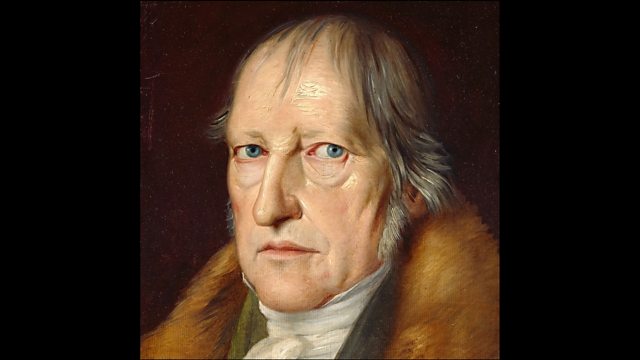
Hegel - In our Time Review


https://ichef.bbci.co.uk/images/ic/640x360/p0c7jnpy.jpg


Melvyn Bragg and guests discuss ideas of Georg Wilhelm Friedrich Hegel (1770 - 1831) on history. Hegel, one of the most influential of the modern philosophers, described history as the progress in the consciousness of freedom, asking whether we enjoy more freedom now than those who came before us. To explore this, he looked into the past to identify periods when freedom was moving from the one to the few to the all, arguing that once we understand the true nature of freedom we reach an endpoint in understanding. That end of history, as it's known, describes an understanding of freedom so far progressed, so profound, that it cannot be extended or deepened even if it can be lost.

With Sally Sedgwick, Professor and Chair of Philosophy at Boston University, Robert Stern,
Professor of Philosophy at the University of Sheffield, and Stephen Houlgate, Professor of Philosophy at the University of Warwick.

Review

Having heard Russell's critique of Hegel, it was interesting to hear a very positive discussion of Hegel. I did get the impression, however, of some special pleading when it came to faults and issues with Hegel's philosophy.

1. Evolution

Evolution - Hegel's philosophy rejected evolution. He said: “it is a completely empty thought to represent species as developing successively, one after the other, in time…. The land animal did not develop naturally out of the aquatic animal, nor did it fly into the air on leaving the water.” 

He also clearly could not see continuities between different forms of life, especially man and animal: "even if the earth was once in a state where it had no living things but only the chemical process, and so on, yet the moment the lightning of life strikes into matter, at once there is present a determinate, complete creature, as Minerva fully armed springs forth from the head of Jupiter…. Man has not developed himself out of the animal, nor the animal out of the plant; each is at a single stroke what it is.”

In an article, Houlgate attempts to defend Hegel by making out that Hegel had only come across Lamark and earlier ideas about evolution, and pre-dated Darwin. That's true, but earlier ideas on evolution also attacked the notion of fixity of species which we see in modern Creationism and very clearly in Hegel.

It is instructive to note , as John Wilkins, University of Queensland has shown, that Linnaeus, the father of modern taxonomy, began his career committed to the fixity of species, but began accepting the evidence against such fixity approximately a century before Darwin's ideas were published. The difference is  that Linnaeus was a meticulous observational scientist, and it is clear that Hegel is making statements which are not backed up by scientific evidence of any kind. 

In this respect, I do think there is at least a modicum of substance in Popper's comment that Hegel “draws real physical rabbits out of purely metaphysical silk-hats”.  Houlgate's defence of Hegel seems so much like special pleading. 

Darwin, incidentally, never claimed for himself that he was the first to use the idea of evolution, only its mechanisms. As he stated in a letter:

"No educated person, not even the most ignorant, could suppose I mean to arrogate to myself the origination of the doctrine that species had not been independently created. The only novelty in my work is the attempt to explain how species became modified, and to a certain extent how the theory of descent explains certain large classes of facts; and in these respects I received no assistance from my predecessors."

Darwin was an experimental scientist, who carefully collated observations, and gradually formed conclusions based on painstaking work, and thought about that evidence. He was prepared to follow the evidence. Hegel was bound by his philosophical assumptions, and clearly could not break free from them when it came to evolution, instead following in the tradition of the Great Chain of Being, where species are fixed and immutable from their conception.

2. Slavery and Africa

Hegel is praised for being against slavery. But remarks on Africa in the "Lectures on the Philosophy of World History" show that he was clearly not an abolitionist. Hegel dismissively said that Africa “is no historical part of the world; it has no movement or development to exhibit.”. He was not alone there. Kant also was dismissive of Africa. Hegel sees black Africans as unworthy of freedom: "No absolute injustice is done to those who remain servants, for whoever lacks the courage to risk his life in order to obtain freedom deserves to remain a slave."

And Hegel was avidly quoted by those who opposed the abolition of slavery, because he saw it is an intermediate phase, not bad in itself:

“The ‘natural condition’ itself is one of absolute and thorough injustice, contravention of the right and just. Every intermediate grade between this and the realization of a rational State retains, as might be expected, elements and aspects of injustice; therefore we find slavery, even in the Greek and Roman States, as we do serfdom, down to the latest times. But thus existing in a State, slavery is itself a phase of advance from the merely isolated sensual existence, a phase of education, a mode of becoming participant in a higher morality and the culture connected with it.”

With regard to the negro, Hegel said that "They do not attain to the feeling of man’s personality,—their mind is entirely dormant, it remains sunk within itself, it makes no progress, and thus corresponds to the compact, undifferentiated mass of the African land."

At this point I'd like to look at another, but lesser known scientist. Heinrich Barth Barth had been trained by professors influenced by Hegel and began with a background informed with racist perceptions. Hegel had written that: "It is in the Caucasian race that spirit first reaches absolute unity with itself. It is here that it first enters into complete opposition to naturality, apprehends itself in its absolute independence, disengages from the dispersive vacillation between one extreme and the other, achieves self-determination, self-development, and so brings forth world history. It is, the concrete universal, self-determining thought, which constitutes the principle and character of Europeans."

But Barth had the benefit of  a three-year, three-continent journey along the shores of the Mediterranean when he had encountered African culture in  person. As Steve Kemper noted: "He was also a scientist who tried to keep an open mind and follow the evidence before him. Part of what Barth discovered on his journey—what he was willing to let himself discover—was that Africa had a long rich history, some of it written, that was unsuspected or ignored in Europe. He recorded barbarity and fanaticism, but also scholarship, governance, culture, tradition. "

Why could Barth see things better than Hegel or Kant? Because he did not accept second hand evidence from others in formulating his records, but went out on the ground to see for himself, and was prepared to let what he saw inform and change his views.

3. Odds and Ends

It was interesting to listen to this program, but the obscure nature of Hegel's own texts was not mentioned, not where he really came adrift in his thinking. One thing which came out which is palpably wrong is the is the idea of progress. While he saw this as being troubled, and having setbacks, he nevertheless has an idea of history leading somewhere. He's not alone there - the Whig historians did the same in their own way with histories of Britain. But there is really no basis for it apart from wishful thinking.

Here's a few choice examples of his obscure language:

"A rational consideration of Nature must consider how Nature is in its own self this process of becoming Spirit, of sublating its otherness—and how the Idea is present in each grade or level of Nature itself: estranged from the Idea, Nature is only the corpse of the Understanding. Nature is, however, only implicitly the Idea, and Schelling therefore called her a petrified intelligence . . . ; but God does not remain petrified and dead; the very stones cry out and raise themselves to Spirit."

“It is often said that the nature of Force itself is unknown and only its manifestation apprehended. But, in the first place, it may be replied, every article in the import of Force is the same as what is specified in the Expression: and the explanation of a phenomenon by a Force is a mere tautology. What is supposed to remain unknown, therefore, is really nothing but the empty form of reflection-into-self, by which alone the Force is distinguished from the Expression — and that form too is something familiar. It is a form that does not make the slightest addition to the content and to the law, which have to be discovered from the phenomenon alone. Another assurance always given is that to speak of forces implies no theory as to their nature: and that being so, it is impossible to see why the form of Force has been introduced into the sciences at all.”

"The True is the whole. But the whole is nothing other than the essence consummating itself through its development. Of the Absolute it must be said that it is essentially a result, that only in the end is it what it truly is; and that precisely in this consists its nature, viz. to be actual, subject, the spontaneous becoming of itself. Though it may seem contradictory that the Absolute should be conceived essentially as a result, it needs little pondering to set this show of contradiction in its true light. The beginning, the principle, or the Absolute, as at first immediately enunciated, is only the universal. "

"Spirit . . . has shown itself to us to be neither merely the withdrawing of self-consciousness into its pure inwardness, nor the mere submergence of self-consciousness into substance, and the non-being of its difference; but Spirit is this movement of the Self which empties itself of itself and sinks itself into its substance, and also, as Subject, has gone out of that substance into itself, making the substance into an object and a content at the same time as it cancels this difference between objectivity and content. . . . Spirit, therefore, having won the Notion, displays its existence and movement in this ether of its life and is Science."

Now later philosophers say this is not obscure, and can tease out the meaning. And yet what they say often sounds very different to what we see here. It becomes a "Quest for the Historical Hegel", and in that way when Hegel scholars look down into the deep well of the evidence for what Hegel meant s they tend to see a Hegel that looks a lot like themselves.

Friday, 27 May 2022

Mrs Heelis’ Legacy


This poem was inspired by listening to Eric Pringle's marvellous radio play "Meeting Bea" starring Stephanie Cole and Clive Swift. It's been adapted as a stage play, and it is something I'd really love to see put on in Jersey.

Mrs Heelis’ Legacy

Summer holiday in the Lake District as a girl:
And so it began: as the clouds above swirl,
Winds ruffle Lake Windemere, natural glory,
Start of the journey, the beginning of a story;
With imagination, observation, and sheer luck,
Peter Rabbit, Tom Kitten, Jemima Puddle-Duck,
Created her little books prepared for a little hand,
And children delighted in Tale of Piglet Bland;
Then she met and fell in love with Norman Warne;
He died: her heart was broken, shattered, torn;
The Tale of Mrs. Tittlemouse, wood mouse,
Bought Hill Top Farm to be her house;
And so there she went, to mourn, and stay,
Far from the city lights, found a different way;
A sheep farmer she became, amidst those hills,
Out in all weathers: hot summers, winter chills,
Becoming a countrywoman through and though,
No regrets, no backward glance, no time to rue;
So far and wide, now fell farming, she did range,
And with William Heelis came another change:
Marriage, a new way of life, Miss Potter lost,
Mrs Heelis now, and well worth the cost;
In Village Halls, they went: to merry dances,
While all the time, her vision, her plan advances;
Last twilight writing: small footprints in the land;
A story: The fairy caravan pulled by a tiny hand,
Across the valleys and low grazing lands it goes,
Telling tales of farming folk, in longer prose;
And the imagination fades, this life to forsake:
Sold to buy more of that land, beside the lake;
Save from greedy developers, a beautiful land,
Her legacy, unspoilt hills, farms, was all planned;
Now she is gone, ashes to ashes, dust to dust,
A legacy remains: a treasure that will not rust.

Postscript:

As I walk'd by myself,And talked to myself,Myself said unto me—
Beatrix Potter became a big landowner who eventually left fifteen farms to the National Trust, to help keep hill farming alive. When about sixty she was approached by an American who wanted her to write another 'Beatrix Potter' book for the American market. Eventually she agreed, and produced, after much labour, "The Fairy Caravan". It wasn't in the same class as her other work, but it enabled her to save another farm from the developers at a time when preserving the countryside for the future wasn't in fashion.

L'Etacq Woodcrafts

From 1966 Jersey Life. Now closed for many years. I have a brochure and will put that online sometime too. Hark at "the remote westerly village" - I've never in my life seen it called that outside of this article!


L’ETACQ WOODCRAFTS
BY THE “JERSEY LIFE’ REPORTER

In the remote westerly village of L’Etacq, where the farmers gather huge piles of vraic at low tide, and legend has it that a manor and an oak forest lie beneath the sea, a Jersey woodcarver, almost in spite of himself it seems, has created a tremendous tourist attraction. A large car park is now reserved for L‘Etacq Woodcrafts, and coaches and charabancs disgorge visitors who throng the little showroom and surge through blue stable doors up a wide stone staircase to explore the workshops in a loft above.

Following the crowd, I saw the broad figure of Mr. Phillip Le Gresley straighten up from his bench, where two delicately carved chess knights in the making were absorbing his attention. Glancing at his swollen cheek, I remarked sympathetically ‘Why, you’ve got toothache! Is it very painful?’

‘No, no’, he chuckled, ‘I expect plenty of people think that. You see I chew tobacco. I like a pipe but the smoke gets in my eyes while I’m at the bench’. The plug remained in his cheek, unseen and immobile for the next hour, and in no way affected his speech.

The son and grandson of Jersey woodworkers, Mr. Le Gresley struck me as a rather remarkable man. Good business man though he must be, the impression he gives is of a serene and simple person, with a great devotion to his craft.

‘I started wood-carving as a little boy‘ he told me, ‘and I’ve been at it ever since. I hardly know how all this came to pass. It was the visitors who pushed me into it. They used to post their letters by the window of my little workshop down the road, and they were always on at me to open a shop and sell my carvings’.

In those days Mr. Le Gresley ran his own joinery and carpentry business from his farmhouse home nearby. In 1952 he built his present house, looking out over I’Etacquerel Rock, converting the loft into workshops and a wood store. Six years ago he added a little shop-cum-showroom below, stone steps to lead from outside to the loft, and opened L’Etacq Woodcrafts.

Burmese teak, mahogany, American walnut, sycamore, beech, oak, lime and Lignum Vitae, one of the hardest woods in the world, are the principal media for his work. He dropped a piece of the Lignum into a bucket of water and it sank like a stone. There was much to admire, but the rustic tables edged in natural bark attracted me particularly. So did the carved lampshades, the little hall chairs of old oak and mahogany and the salad and fruit bowls, oiled to a rich deep brown. Huge wooden spoons hung over some of the work benches, inscribed ‘Please ensure that brain is engaged before operating mouth’. ‘Those are quite popular’, Mr. Le Gresley told me, ‘we make them to sell to the pubs for hanging in the bar’.

Mr. Le Gresley and his two young assistants (‘it‘s a nine-year apprenticeship, then they’ll probably start up for themselves somewhere’), work away placidly at their benches while the interested visitors wander around, breathe down their necks and ask innumerable questions, all of which are answered with courtesy and patience. ‘All the same, we have to catch up on the stock by working in the evenings’.

One end of the loft leads to the woodstore where huge lime logs cut in Grouville lie waiting to be turned into tables; fishing nets hang from the beams and seascapes by Jersey painters adorn the walls and sometimes sell to the visitors. He lends this wall space to an artist friend whose picturesque presence and conversation is very much in keeping with the atmosphere.


One of Mr. Le Gresley’s proudest achievements is a magnificent seigneurial chair in English oak ordered by the Parish of St. Ouen for presentation to the people of Sark. This led to an order for a similar chair from a lady resident of that island, in memory of her father, the late Mr. R. M. Lamb.

The extremely busy shop below, where the smaller wood-carvings are sold, is run by the son-in-law, Mr. Gordon Richard and the owner is not very often seen there. ‘I‘m happier up above carving’ 
he remarked, obviously longing to return to his Lignum Vitae chessmen, so I said good-bye.


Saturday, 21 May 2022

Empire of Pain


What I mistakenly thought was sunburn turns out to be a case of shingles. Shingles, also known as zoster or herpes zoster, is a viral disease characterized by a painful skin rash with blisters in a localized area. The term "shingles" comes from the Latin word "cingulum," which means belt or girdle; this is because the rash usually appears in a band or belt-like pattern.

Empire of Pain

Headache, the red sores, and pain
At times in waves, an ebb and flow
Strong tides break inside the brain
And I wish, I wish, that it would go

The ship is caught up in the storm
Strikes the rocks, breaking apart
Gradually falling apart, losing form
Too late the danger shown on chart

The fire ball in the sky, bright flame
Sound comes later: the shock wave
Reaching across air to shatter, maim
A deep mark on the earth to engrave

An empire of pain seen in many ways
Endures, time after time, endless days

Friday, 20 May 2022

Tyler's Shoe Shop


Tylers' Boots was established about 1861 in Leicester, which was the major footwear manufacturing centre of the time. It expanded all over Britain and crossed the Irish Sea to Dublin in the 1880s, and also established branches in Jersey. 

This brochure is not dated, but is clearly post-war - the New Era cinema mentioned opened in 1954. Internal clues are that it probably dates to the 1960s. 1968 saw the merger of National Provincial Bank and Westminster Bank, which are separate here, as is Martin's Bank which was bought by Barclays Bank in 1969. Also Williams Deacon's bank was established in Jersey in the 1960s.

General History

In "LEICESTER AND THE GROWTH OF FOOTWEAR DISTRIBUTION,1850–1914", David Holmes notes that:

John Tyler and his two brothers separately commenced manufacturing boots and shoes about 1860. 39 Gradually they amalgamated their interests and became involved with retail. By 1891 they had about 100 branches throughout Britain and were especially strong in Ireland. By this time they also had a thriving shoe repair business. By 1891, Tyler had been repairing boots ‘for a number of years

The progress of the company may be charted, though its emergence as a family concern and take-overs of 'risks', to its establishment as a major shoe retailer with much attention paid to promotion and advertising. They were acquired by ShoeZone in 1986.

The Jersey Brochure says:

"FOR many generations the name TYLER has been synonymous with all that is best in footwear. At Tylers the entire family find shoes that are up-to-the-minute in styling, produced by craftsmen from the finest quality materials at keenest prices too."

Other Information on the Brochure

Head Post Office. Broad Street, St. Helier, is open weekdays from 9am. to 5.30 p.m., except Saturday which is 9am to 4.30 pm. Deliveries: Letters -Island delivery 8.15 a.m., Restricted delivery 12.30 pm. A Trunk Call Office is established at the Central Exchange, Minden Place, St. Helier, for use of the general public.

[Trunk calls were phone calls made to locations outside of Jersey!]  

Half-day closing. Thursday (Banks Saturday).

Information.. The Tourism Committee and Information Bureau is situated at The Weighbridge, adjoining harbour. Telephone 24779

Banks

Barclays. Library Place, St. Helier and Quennevais Parade, St. Brelade.
Lloyds, Broad Street, St. Helier, Quennevais, St. Brelade and Five Oaks Parade, St. Saviour.
Midland, Library Place and Hill Street, St. Heller and Quennevais Parade, St. Brelade.
Martins, Halkett Place, St. Helier.
National Provincial, Royal Square, St. Helier and The Market, St. Aubin.
Westminster, Library Place and Beresford Street, St. Helier and Red Houses, St. Brelade.
Williams Deacon’s, Mulcaster Street, St. Helier and Quennevais Parade, St. Brelade.

Theatre. Opera House, Gloucester Street.

Cinemas. There are four Cinemas. The Forum, Green Street; Wests, Bath Street; The Odeon, Bath Street; and New Era, Georgetown.

Golf

There are two 18-hole Links and one 9-hole. La Moye Golf Club (18 holes) on the western side of Jersey; Royal Jersey Golf Club (18 holes) at Grouville, on the eastern side; and a 9-hole Golf Course known as St. Clement’s Golf Course at Greve d’Azette.

Bathing. Safe sea-bathing may be enjoyed at most of the bays and at the Jersey Swimming Club Bathing Pool at Havre-des-Pas.

Fishing. Many places may be found around the coast and private arrangements may be made with local boat owners.

North Marine Drive. This road which extends along the brink of the cliff for a distance of two miles around the whole of St. John’s Bay to the vicinity of the Wolf Caves, is not show on most maps. It is shown here but not named.

Jersey Zoo. Augres, Trinity. On Bus route. Open Daily 10 am. until dusk.

Speed Limit. 40 mph. throughout the Island.


Printed by the Guernsey Press Limited


a

Saturday, 14 May 2022

Terminus


This poem explores the themes of parting via the metaphor of a train station: the terminus, either for lives or to new hope, and I make no apology for linking the closing meditation on death to the ancient myth that a death is a new star in the sky. 

Yes, it is a myth, but what it represents is an idea of change and persistence, and that in this myth, the stars become a conduit to enable us to remember the dead. 

The function of mythology is not to be literal and appeal to the mind, but to reach the heart, in a way like music does, that cannot be properly put into words except imperfectly, and in this case, enable us to  come to terms with loss and grief. Stars are symbols of light in darkness.

Terminus

It’s the end of the line, say goodbye:
Partings are always sad, we may cry;
Sadness at the station, departing train:
Soldiers for the war, the mud, the rain;
Trenches await, but sweetheart kiss,
Sorrows of times lost, times to miss;
Another train leaves, children wave,
Parents telling them to always be brave:
They would not meet again, for death
In the gas chambers comes, breath
Cut short by poison; yet the transport,
However much it failed and fell short,
Saved children from that holocaust:
Kindertransport, those who crossed,
To safer lands, new hope, new life,
Away from the horrors of that strife;
And to stay and fight, or time to flee;
Today the choice again: the refugee,
Leaving possessions, exploding shells,
Of an invasion: cities to ruined hells;
But other partings closer, the loss
Of a loved one, taking up that cross:
Pain of parting, the infirmity of age,
Or dying remote, alone, off-stage;
Quiet lives, sometimes in despair:
A sudden loss too great to bare;
And terminus: the end of a line:
Remember in tears, that is fine;
And go out from that dark station,
Passing generation after generation;
Sunset comes, nightfall, but there
Appearing stars shine, light up the air;
And new stars are born every night:
And there is the mourned in sight,
In reminders: light in dark places,
As we remember beloved faces:
Now shining brightly so far above,
A sign of hope, and a sign of love.

Thursday, 12 May 2022

1066-1966 Archery Tournament: Jersey versus France


1066-1966 Archery Tournament
By Marcel Le Masson

JERSEY AND ITS connections with Normandy are well known, concrete proof of this was found when the Jersey Archery Society paid their first visit to ‘Valognes’, a small town situated close by Cherbourg in the centre of the Normandy countryside, that Valognes suffered badly when the allied forces landed on the nearby coast is clearly marked by the almost newly built Town Centre, a focal point being the clean stone of the not yet completed church contrasting against the darker older buildings which form a shopping centre round a neat and tidy kept square.

The Jersey party of ten archers led by Honorary Secretary Roy Moody, travelled by air to Dinard then using three cars drove via St. Malo and Avranche straight up the peninsular at speeds unusual to Jersey drivers used to the forty mile limit, the complete drive was accomplished in a little under three hours. Upon arrival at Valognes the party were welcomed by Monsieur Jacques Daubuch, President of the town’s Archery Society and Chamber of Commerce the body responsible for sponsoring the tournament.


After spending a very comfortable night at the Agriculture Hotel the party awakened to find the main streets of the town sprouting gaily decorated poles that marked the route of the May Queen procession to take place later in the day. In the meantime a group of French Horn Blowers dressed in hunting colours visited almost every street corner and played their fanfares.

Archery ranges had been set up at the Bourgneuf Municipal Stadium de Valognes, the first shoot was against local French archers and teams from other areas including Monsieur C. Boulanger seven times champion of all France and winner of this tournament, each member paired with an opposite then shot forty arrows at fifty metres, a distance not normally used by the Jersey archers.
                                                                                 

Scoring was by number of hits, so close grouping counted heavily, rafter a number of sighting shots the Jersey archers settled down and soon began to make an impression of their French hosts.

A very highly regarded personage at the celebrations was Monsieur De Brerill, Minister of State without portfolio who arrived with an escort of smart white helmeted outriders and convoy of fast Citron State Saloons, Monsieur De Brerill played an important part in the independence negotiations with Algeria.


At the now crowded stadium the procession disbanded; here, on a special stage, the bands, dancers, singers and French horn blowers entertained the capacity audience whilst the archers in colourful green, red and black mediaeval- style jerkins shot with friendly competition against each other in a balloon shoot.


The amazing accuracy of the shots brought gasps of amazement and surprise from the audience numbering well over three thousand.

All too soon the afternoon entertainment came to a close, but competition for the Jersey archers continued when they tried their hands in the dogem cars at the fair going full swing during the evening.

A return visit from Valogne by the French archers has been suggested next September. After such a successful visit the Jersey Archery Society has forged very strong links with a town steeped in the history of 1066 and all that.

Saturday, 7 May 2022

Crocs and Daisies


A blatant reference to Lewis Carrol's famous nonsense poem! But something silly yet a homage seemed appropriate! And following it, a little bit of fun in a short poem about Medusa.


Crocs and Daisies

Crocs on the grass, but is that right?
Shouldn’t they have teeth to bite?
How doth the little crocodile, they say
Neatly spreads his claws, in hunt for prey
Then what about the daisies? But
When gently smiling jaws snap shut,
After a grin so nice and full of cheer,
It’s pushing up the daisies, dear!

Medusa

On meeting Medusa face to face
Seeing her snake-like writhing hair
I thought, dear me, so little grace
So she fixed me with a stony stare

Thursday, 5 May 2022

A Jersey Success Story: Briggs of St Ouen


From Jersey Life, 1966

A Jersey Success Story: Briggs of St Ouen

IF VARIETY is truly the spice of life Mr. Neville Briggs can surely claim to have experienced his fair share He has been a hairdresser, wartime soldier, van driver, potato packer in a local store, restaurant manager, guest house proprietor with his wife and, again in partnership with his wife, a successful shopkeeper in St. Ouen.

The name ‘Briggs of St. Ouen’ is a familiar one in the North West of the island and not only in the North West, the shop is a familiar sight to all ,who pass along the main road from Beaumont to Plémont for it has an attractive and ‘go ahead appearance. Many will remember that some 11 or 12 years ago there was a semi derelict shop on the site but all that has changed and the premises are now a store of which anyone can be proud. All this was not achieved in a day, much hard work, much thought and not a little heartache must have gone into it but now Mr. and Mrs. Briggs are reaping the reward of their work and their faith in themselves and their ability.


It all started back in 1947 when Mr. Briggs, after army service in Africa was demobbed and came to Jersey for a holiday; he had been apprenticed in gent’s hairdressing in his youth and, liking the island, decided to stay here and took a job in hairdressing. He later became a van driver on country delivery to meet people and gain a knowledge of the island, a knowledge which has stood him in good stead.

In 1950 he managed a St. Helier restaurant, gaining more varied experience and a year later he met and married his wife. ‘We managed a five-day honeymoon in Guernsey but have not had a holiday since’ he recalls.

In 1953 the couple took a small guest house in St. Ouen and while helping his wife to run it Mr. Briggs realised that there was no gent’s hairdresser in that part of the island and deciding to put his experience in that field to practical use, opened a salon in an annexe to the guest house opening in the evening between 7.30 and 11 o’clock, he also took an agency for Semtex household tiles and for a short spell worked in a potato store. 

In 1956 shop premises became available at Haut du Marais, the shop had been empty for some time and the adjoining house needed a great deal of work done to it but Mr. and Mrs. Briggs seized the opportunity offered them and having sold the guest house, with the help of a close friend acquired the Haut du Marais property.

They converted the existing shop into two shops and established the hairdressing business in one of them; Mrs. Briggs hit upon the idea of opening the second shop as a small draper’s shop selling wool and baby wear realising there was a potential in the country for an establishment of that sort.

After a year the chance came to open a sub-Post Office—there had been one at the old shop some time before—and this opportunity was grasped. The shop was altered to incorporate the post office, a new wing being built and at the same time the drapery department was extended.

The property had been in a very dilapidated condition but by dint of hard work on the part of Mr. Briggs this was gradually put right; the couple suffered severe flooding three times before the States Main Roads Department put in an extra drain to take off the flood water, that was only one of the obstacles which they had to surmount but sheer grit and determination pulled them through and gradually more space was made available to take more departments. Whilst running the shop Mrs. Briggs also managed to raise her three children, Peter, Jane and Sarah, making most of their clothes herself.

And so the venture prospered, Mr. and Mrs. Briggs were accepted in the parish and came to make many friends amongst their fellow parishioners—they had proved themselves and in any country parish the world over that means a great deal.


After ten years of trading they decided in 1966 that extensive alterations were required to project a more modern image and to display goods to ‘even better advantage and so the present shop was born. The store now included the Post Office, departments for the sale of toys, haberdashery and wool, hardware, baby wear, men’s wear, children’s and girls’ wear and a 12 ft. display stand for greetings cards for every possible occasion by the firm of Forget me Not, a facility which is greatly appreciated by the customers at the store.

As Mr. Briggs now has less time for active participation in the hairdressing section, this part of the business is under the capable direction of Mr. Les Edwards, who has been with Mr. and Mrs. Briggs for the past four or five years. Although the store has been modernized, it has not lost that personal touch. Mr. and Mrs. Briggs are always available to help and advise customers with their purchases. They both like St. Ouen and its people very much indeed, ‘They have been good friends and loyal customers to us’ remarked Mr. and Mrs. Briggs.

This is a success story, success which is richly deserved by this still young couple who have had the grit and determination themselves, city folk in a Jersey country parish, to establish a flourishing store where nothing like it had existed before. That it is a flourishing concern is evinced by the extensions which have been added and by the fact that whatever time of day one passes there are always cars on the car park. Perhaps within the next year or two Mr. and Mrs. Briggs will be able to enjoy that holiday which they have not been able to take all these years.